Frame & Rough-In Inspection
The frame and rough-in phase is one of the most comprehensive and consequential stages of new construction. Structural framing, windows, exterior dry-in, and all MEPs — mechanical, electrical, and plumbing systems — are installed and verified at this stage, then permanently concealed behind insulation and drywall. Problems identified now can be corrected at minimal cost. The same problems discovered after drywall is up mean walls come down.
What Is a Frame & Rough-In Inspection
This inspection is performed after framing is complete and all rough-in work is in place — before insulation is installed and before drywall begins. That timing is critical. Once insulation goes in, access to framing connections, nail plates, wire runs, and pipe penetrations is limited. Once drywall goes up, everything is gone from view permanently.
What is Inspected
Structural Framing & Connections
- Lumber sizing, spacing, and connections verified per approved plans and Florida Building Code
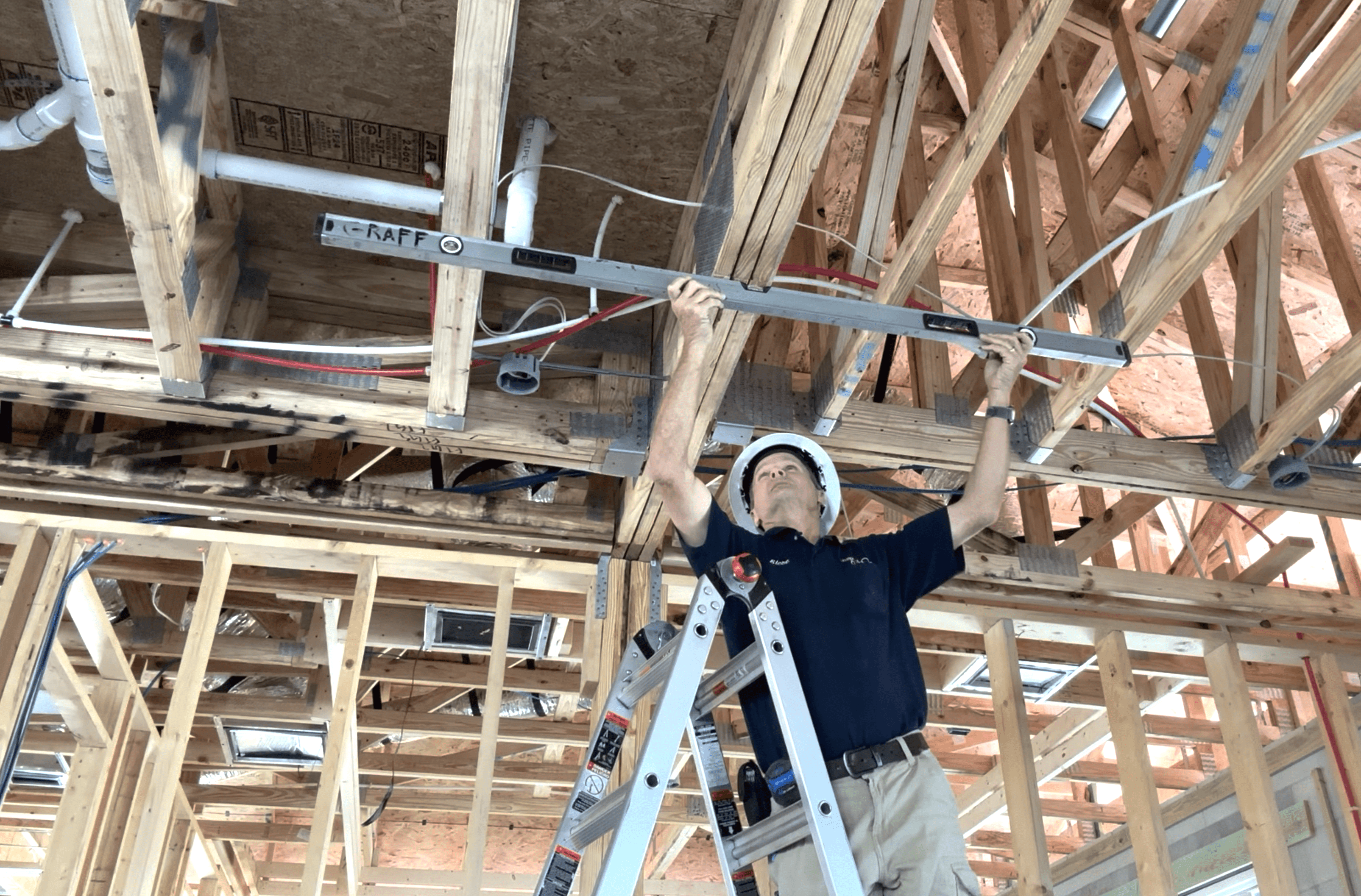
- Ceiling plane and wall alignment checked for level and plumb
- Hurricane strapping and connector hardware inspected at every required connection — roof-to-wall, wall-to-foundation, and beam-to-post
- Support posts, beams, and headers checked for proper sizing, bearing, and connection
- Fire blocking verified at all required penetrations and concealed draft openings
Windows, Doors & Exterior Dry-In
- Window and exterior door installation inspected for proper flashing, fastening, and integration with the weather barrier system
- Secondary water barrier (SWB) verified across the roof deck prior to roofing
- Exterior dry-in — synthetic underlayment and housewrap — inspected for proper overlap, fastening, and integration at all penetrations and transitions
MEPs — Mechanical, Electrical & Plumbing
MEPs are the mechanical, electrical, and plumbing systems that builders and project managers refer to collectively. All three are verified at this phase before they are covered.
Electrical
- Wire routing, box placement, and required clearances reviewed
- Nail plates verified at every location where wiring passes through framing members close to the finished surface — one of the most consistently missed items at this phase and a direct fire risk when omitted
Plumbing
- Supply and drain lines inspected for slope, support, and penetration sleeve protection
- Nail plates verified wherever pipes pass through framing close to the surface — protecting supply lines from fastener penetration and the hidden water damage and leaks that follow
Mechanical / HVAC
- Overall ductwork installation, routing, and support verified
- AC supply vents confirmed serving all conditioned rooms
- Return air vents verified for correct placement
- Note: Duct sizing calculations and airflow testing are outside the scope of a phase inspection
Exterior Waterproofing
Exterior waterproofing is verified as part of the Frame & Rough-In Inspection — it is not a separate service call. At this phase the housewrap, weather barriers, window and door flashing, and all exterior penetrations are accessible and must be verified before stucco or cladding covers them permanently.
Wood Frame Construction — What Is Verified at This Phase:
- Housewrap and weather barrier — proper overlap, fastening, and continuity across the full wall assembly
- Window and door flashing — pan flashing, jamb flashing, and head flashing integrated with the weather barrier at every opening
- All exterior penetrations — hose bibs, electrical, HVAC, and vent penetrations sealed and integrated
- Sealants and caulking — proper application at all transitions, joints, and material changes
Masonry Construction — What Is Verified at This Phase:
- Waterproofing coatings and sealants verified for proper application on masonry block walls
- Window and door integration — flashing and sealant at all openings in the masonry envelope
- All penetrations through masonry verified for proper sealing
- Weep screed and drainage — proper placement to allow moisture to exit the wall assembly
Once stucco, siding, or cladding is applied these elements are permanently concealed. An independent inspection at this phase — while the wall assembly is still open — is the only opportunity to verify exterior waterproofing before it is covered.
In Florida's climate, a compromised exterior envelope rarely announces itself immediately. Water intrusion through a missed penetration or improper flashing detail typically shows up months or years after closing.
If you are already seeing signs of active water intrusion in a completed home, that is a separate evaluation — see our Water Intrusion Investigation page.
Why this Phase Matters
Once insulation is in and drywall goes up, everything is gone from view. A framing connection short on straps, a missing nail plate, an unsupported pipe, a return vent in the wrong location, or an improperly flashed window that gets covered is no longer a construction correction — it becomes a warranty dispute, an insurance claim, or a demolition job.
An independent inspection at this phase creates a documented record of what was in the walls before they were sealed.
Want to see the type of items we find at this phase and how we document them? Review one of our sample inspection reports before you schedule — it will give you a clear picture of what an Inspect-O-Graff frame and rough-in report looks like.