
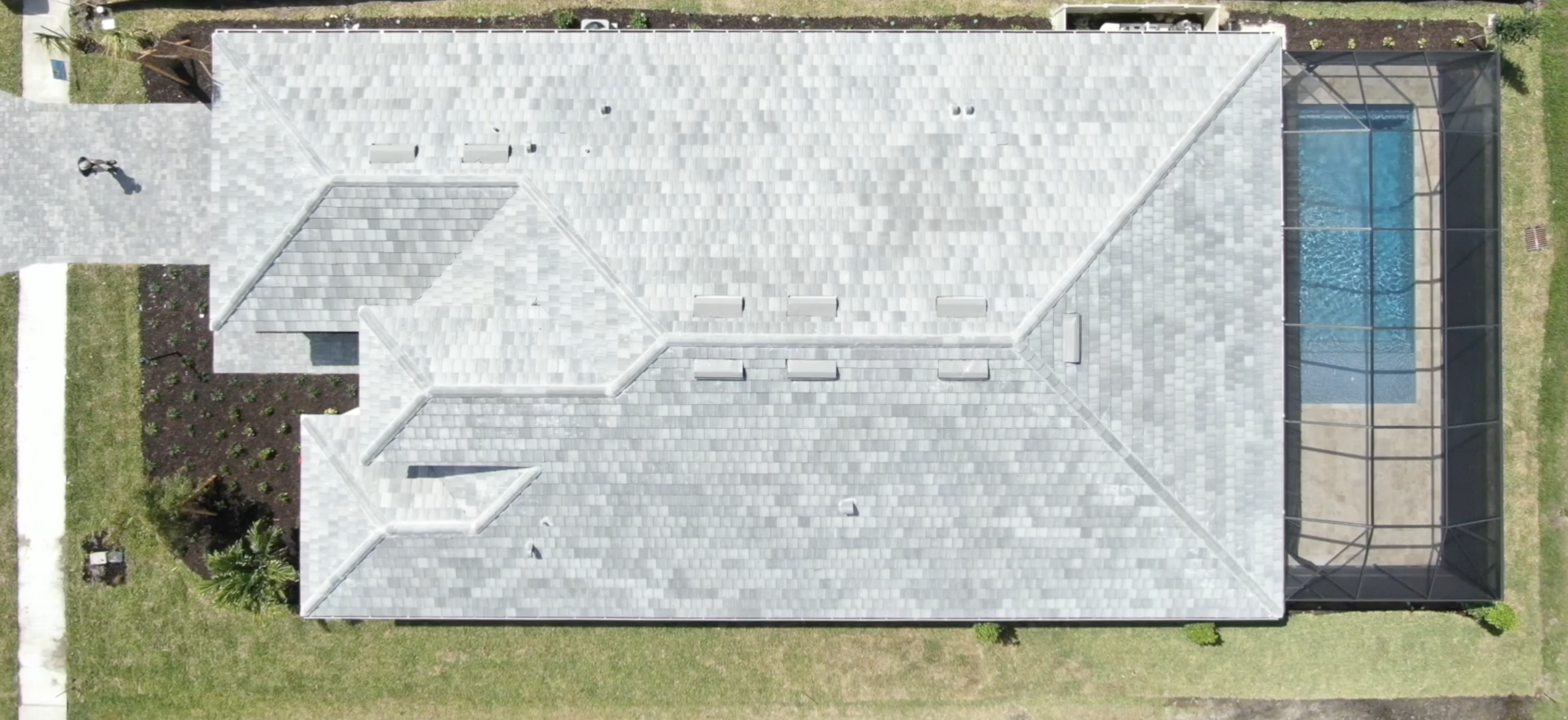
11-Month Warranty Inspection
Most new home builders provide a one-year workmanship warranty — some provide two years. What many homeowners don't realize is that the clock starts at closing, and the window to document and formally notify the builder of deficiencies before that warranty expires is shorter than it seems. An independent inspection before your warranty deadline is the most important inspection you can schedule after moving into a new home.
How Builder Warranties Work
Builder warranty terms vary. Most provide a one-year workmanship warranty. What is consistent: the homeowner is required to notify the builder of deficiencies before the warranty expires. If you miss the notification window, you may lose your right to warranty coverage entirely. Documentation and timing are everything.
Understanding Your Warranty Coverage
Builder Workmanship Warranty: Typically one to two years covering workmanship deficiencies — the primary focus of this inspection.
Roof Warranty
Often extends beyond the builder warranty — commonly five years or more.
Plumbing & Mechanical Warranties
HVAC and mechanical components may carry separate manufacturer warranties.
Structural Warranty
Most new construction carries a 10-year structural warranty covering foundation, load-bearing walls, and structural framing.
Appliance Warranties
Individual manufacturers provide their own warranties — registration required.
Window & Door Warranties
Manufactured products typically carry their own warranties. Knowing your manufacturers and keeping documentation on file is strongly recommended.
This Is Not the Same as Your Final Walk-Through
If you had a final walk-through before closing, you still need a warranty inspection — they are two fundamentally different evaluations.
- Time reveals deficiencies — stucco cracking, waterproofing failures, settlement cracks, plumbing leaks, and mechanical issues not present at closing often appear during the first year
- Access restrictions lift — builders sometimes restrict roof access, attic entry, or panel cover removal at final. The warranty inspection revisits all areas
- Re-verification of final items — if Inspect-O-Graff performed your final walk-through, we will re-check every item from that report
When Should You Schedule
In Steve's professional opinion, schedule at least one month before your warranty expiration date — giving the home maximum time to reveal deficiencies and giving you time to formally notify the builder.
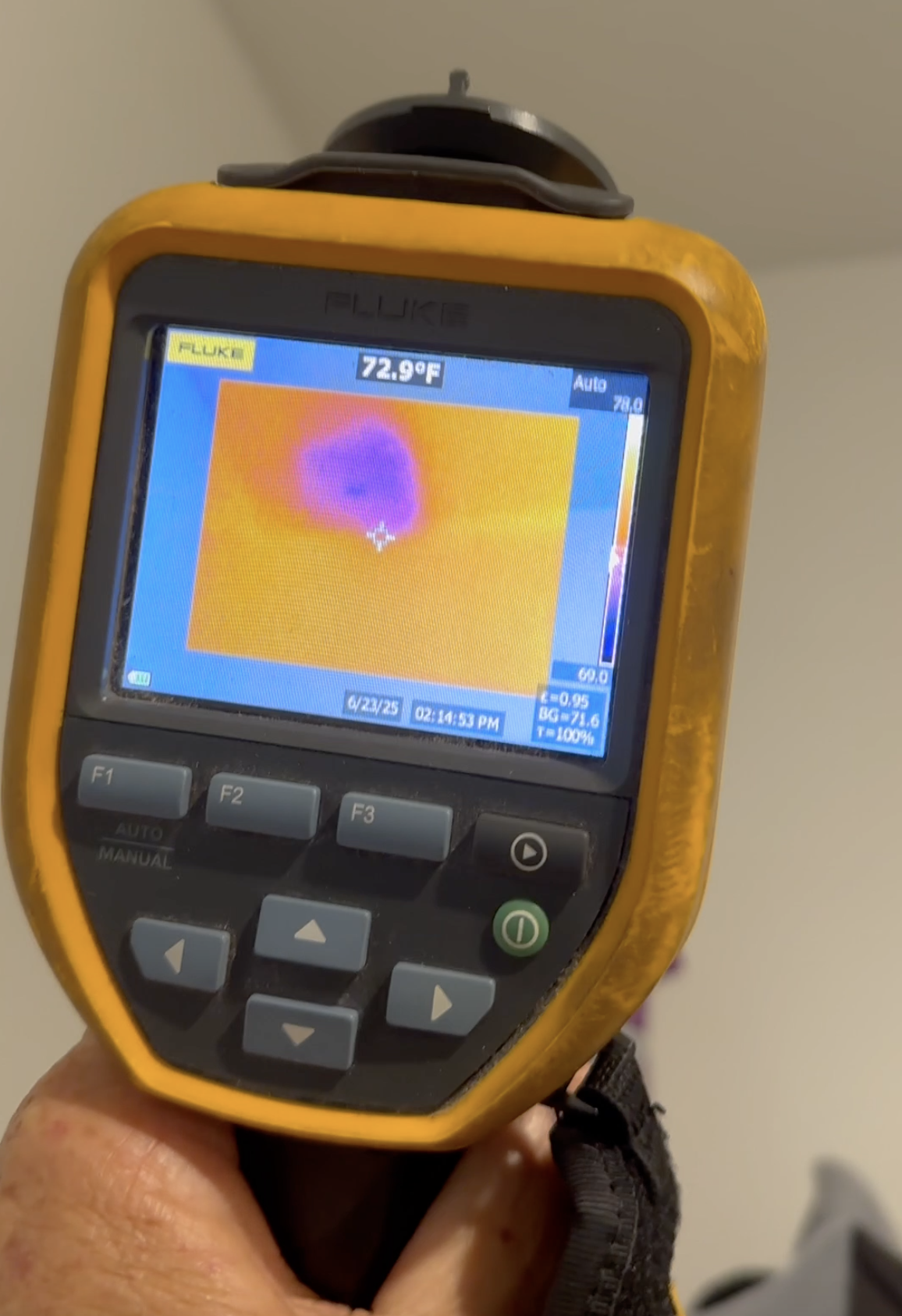
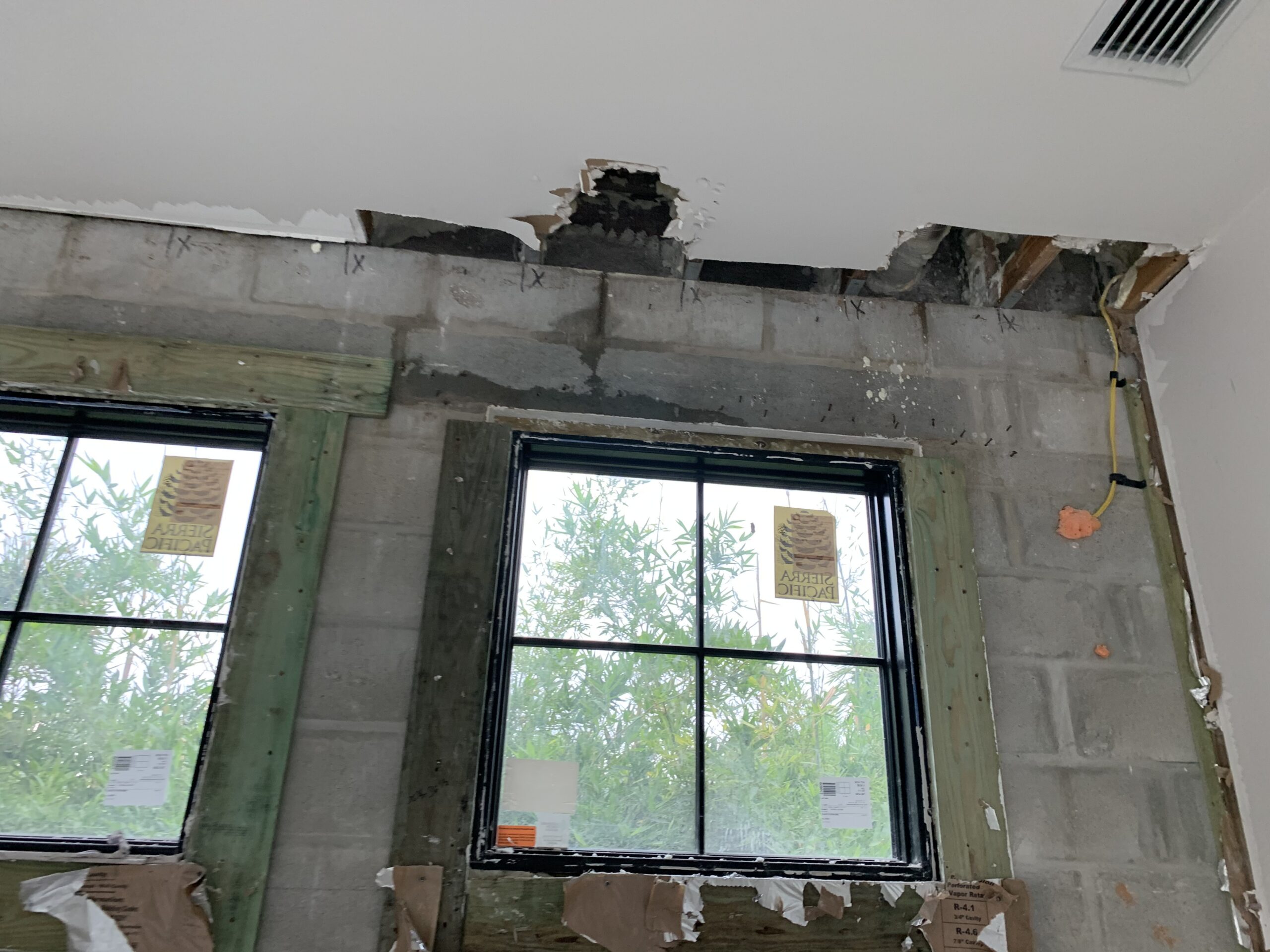
Hidden Water Damage in Brand New Home
What Is Inspected
Exterior Waterproofing & Stucco
- Stucco cracking, separation, and surface deterioration
- Window and door perimeter sealant — one of the most consistently deficient areas on warranty inspections
- Roof-to-wall transitions, flashing, and penetration sealants
- Exterior waterproofing system performance at all wall assemblies
Interior Finish
- Settlement cracks in drywall at corners, above door frames, and at ceiling transitions
- Flooring — gaps, movement, squeaks, and installation deficiencies
- Cabinetry, countertops, and trim — joint separation, finish failures
- Paint and texture — cracking, peeling, and surface failures
Mechanical Systems
- HVAC performance — cooling capacity, airflow, and drainage
- Plumbing — supply, drain, and fixture performance
- Water heater installation and operation
Structural & Foundation
- Visible foundation movement, cracking, or settling
- Roof covering and flashing condition
- Garage door operation and hardware
Why This Inspection Matters
Once your warranty expires, deficiencies that should have been the builder's responsibility become your expense. A thorough independent inspection — timed correctly, documented to a professional standard — is the most cost-effective protection available to a new homeowner.